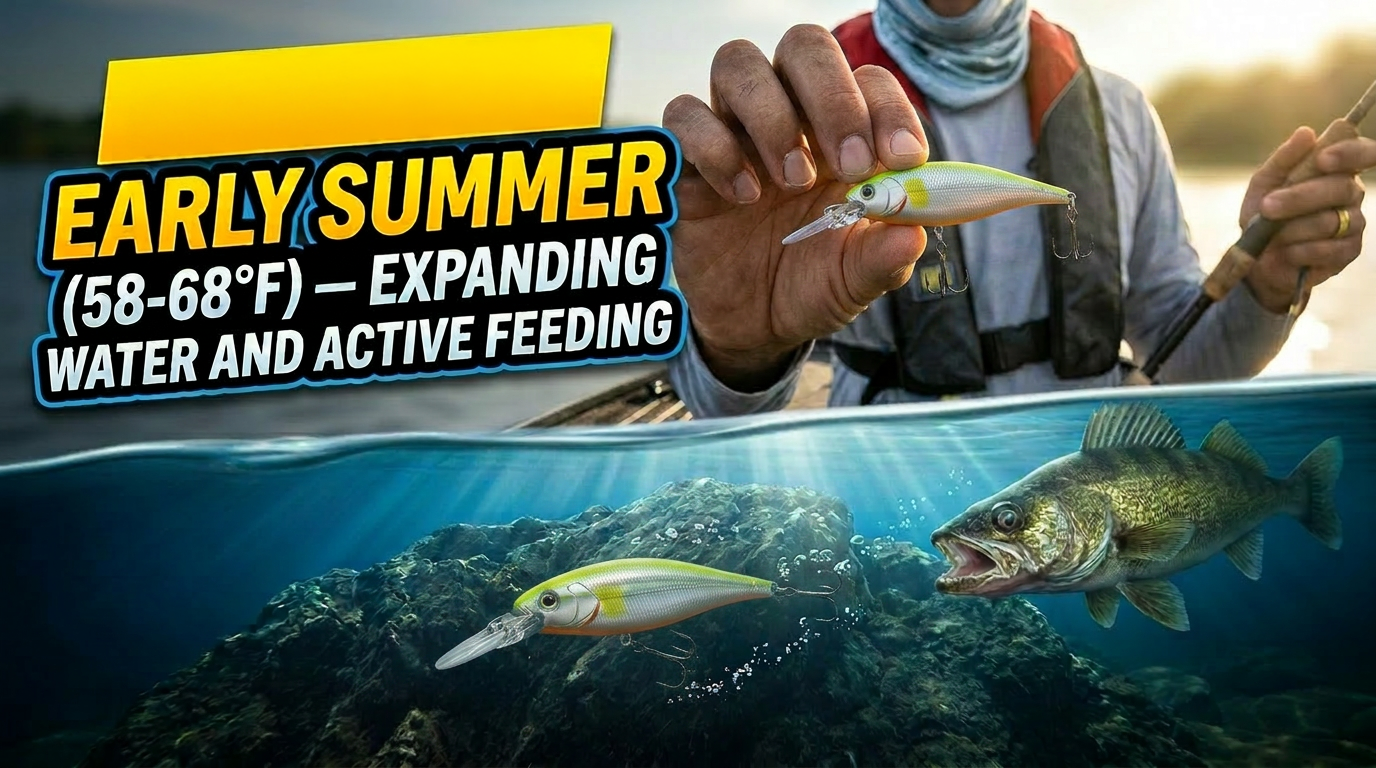
Early Summer (58–68°F) — Expanding Water and Active Feeding
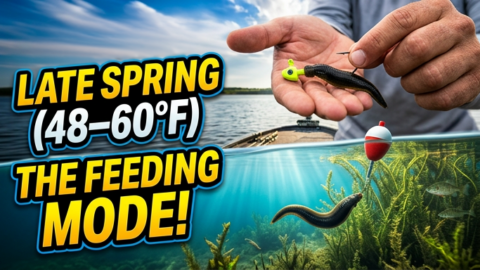
After the transition period of late spring, early summer is when the system really begins to open up across much of the Midwest. The fish are finished spawning, recovery is well underway, and walleyes fully shift into feeding mode. This is one of the first true “cover water” periods of the year, where fish are no longer tightly grouped in predictable spawning zones but instead relate to broader structure and forage patterns across entire systems.
Water temperatures between 58 and 68 degrees signal a major change in behavior. Metabolism increases, and walleyes become much more willing to chase. Instead of staying confined to shallow spawning-related areas or nearby staging zones, fish begin spreading across classic feeding structure. Outside weed edges start developing in northern lakes, rocky points become travel corridors, and mid-depth humps begin holding fish more consistently.
One of the most important keys during early summer is understanding how fish use structure dynamically. Walleyes are not stationary—they move along edges. A breakline, for example, is not just a depth change; it acts as a highway. Fish patrol these areas looking for baitfish movement, and success often comes from intercepting them rather than sitting still.
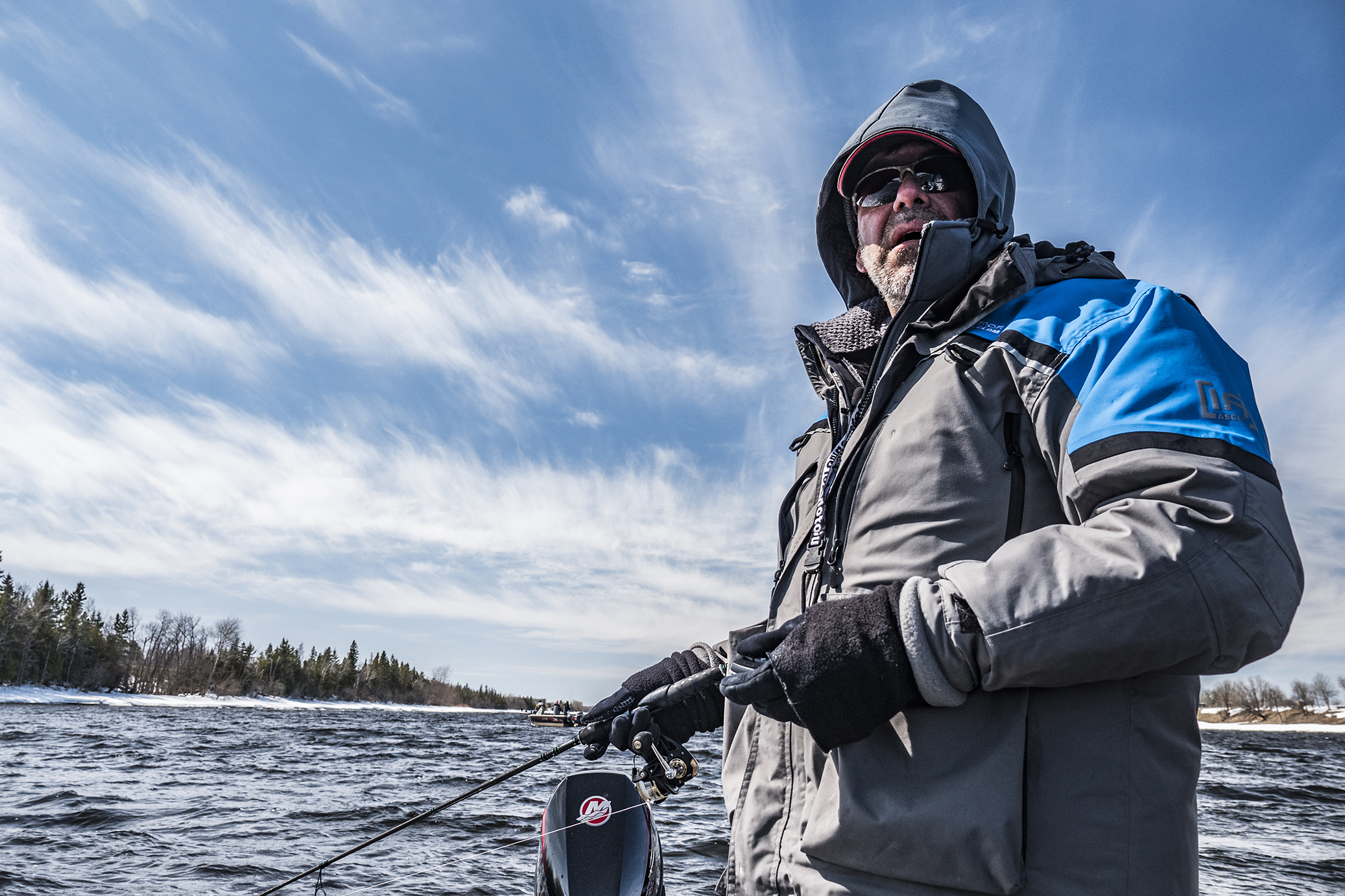
Wind and continues to be a major influence across the Midwest. Windblown shorelines and points consistently outperform calm, protected areas. Wind not only positions baitfish, but also reduces light penetration and creates subtle current that triggers feeding behavior. In many systems, simply committing to wind exposure can simplify the entire day.
Unlike spring, where presentations are often slow and deliberate, early summer allows for more aggressive approaches. Jigging becomes more active, spinner rigs become highly effective, and covering water becomes a major advantage. Fish are more willing to chase, especially when baitfish are visible or concentrated.
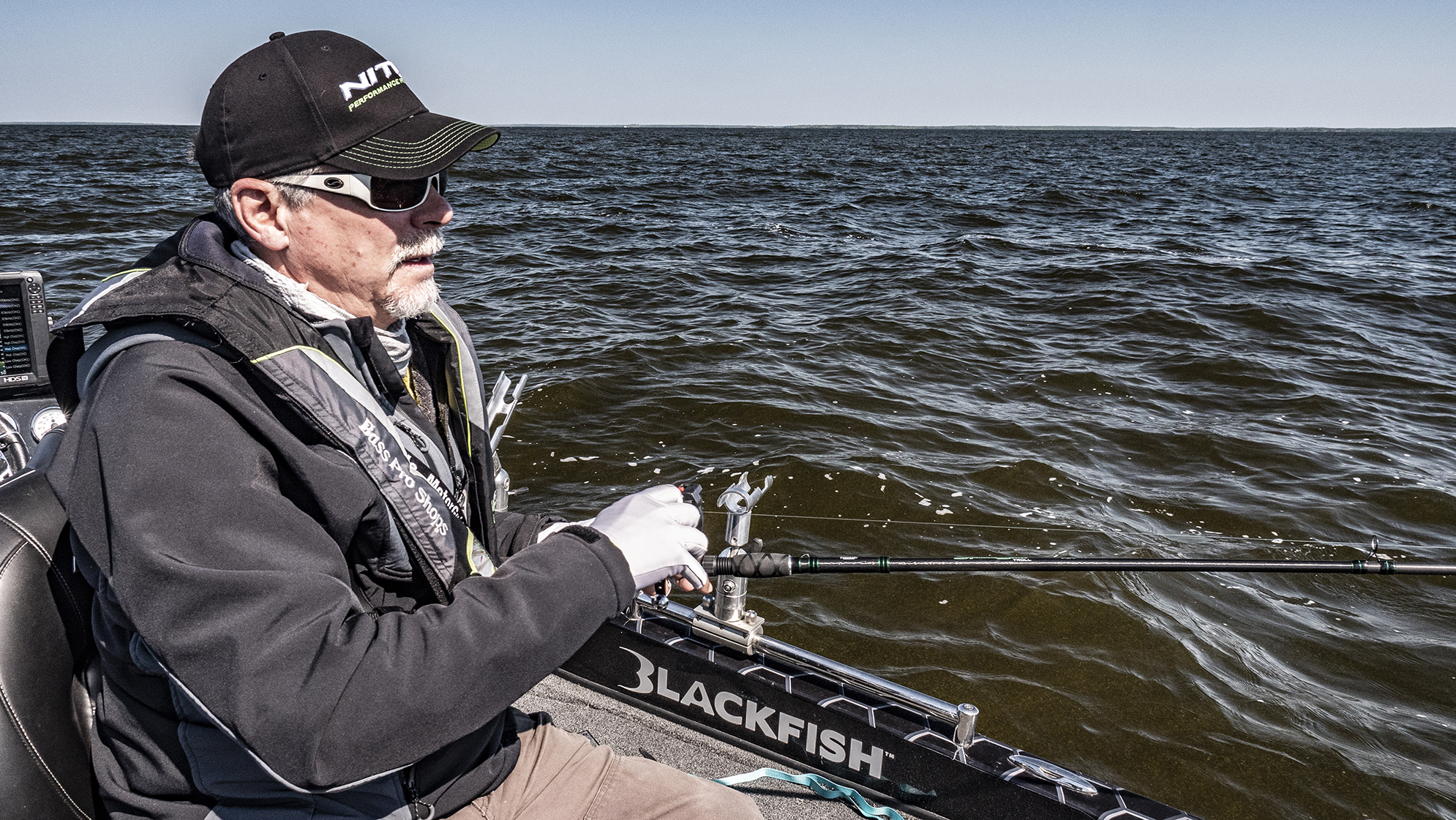
Crankbaits also begin to play a larger role. Whether casting or trolling, they allow anglers to locate active fish quickly across large areas. This becomes especially important in larger Midwest systems where fish may be spread across multiple basins or structural zones.
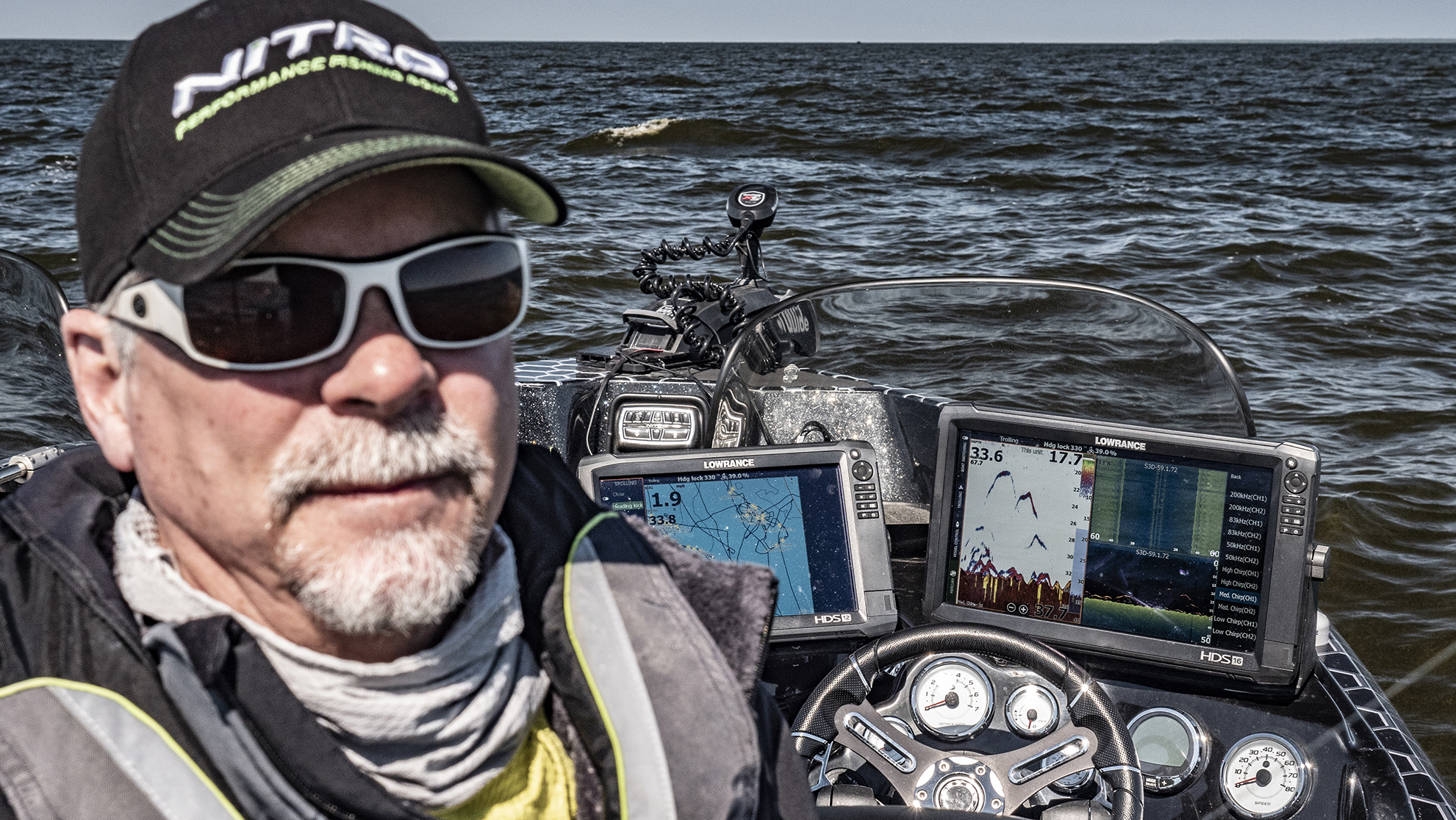
As fish spread farther across lakes and reservoirs during early summer, having the right boat setup becomes just as important as choosing the right presentation. Anglers are no longer confined to shoreline structure or protected spawning areas. Success often means running farther from shore, covering large sections of water, and safely reaching offshore structure where active fish are feeding. A boat built to handle changing Midwest conditions—especially wind and waves—allows anglers to fish confidently and efficiently even when weather conditions become challenging.
A quality deep-V style fishing boat provides a smoother ride through rough water, better control in heavy wind, and the ability to move quickly between locations without sacrificing safety or comfort. Early summer patterns often reward anglers who stay mobile and adapt throughout the day, and that mobility depends heavily on reliable equipment. Whether targeting windblown points, offshore humps, or expansive weed edges, the ability to reach productive areas safely and efficiently can make a major difference in overall success on the water.
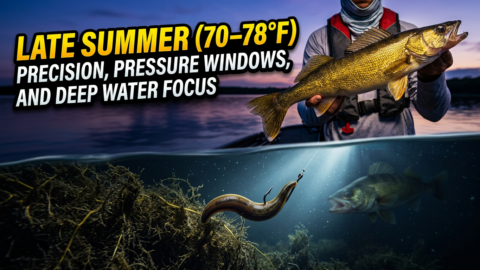
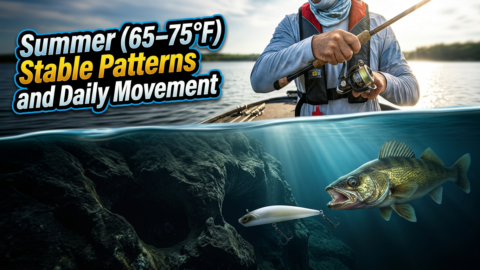
Another key factor is daily movement. Walleyes often slide shallow during low-light periods and move deeper during the day. Understanding this rhythm allows anglers to follow fish rather than search blindly. Early morning and evening bites are often strongest, but midday fishing can still be productive when structure and depth are adjusted properly. During sunrise and sunset periods, fish commonly push onto shallow flats, weed edges, and shoreline structure to actively feed before sliding back toward deeper breaks and basin edges as light penetration increases. On bright, calm days, walleyes often become more structure-oriented and may hold tighter to deeper edges, rock transitions, or submerged humps where reduced light and cooler water provide comfort. Anglers who pay attention to these movement windows and adjust locations throughout the day are far more likely to stay on active fish instead of fishing empty water.
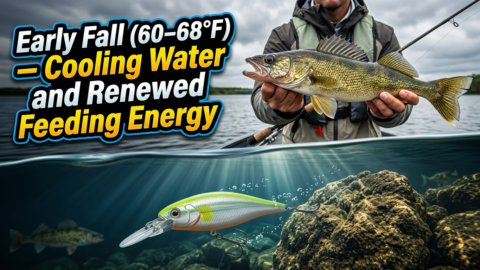
Early summer is really about expansion and efficiency. Fish are more active, more mobile, and more willing to feed—but they are also more spread out. Success comes from covering water, reading structure correctly, and following baitfish movement.
As water temperatures continue to rise across the Midwest, this expansion begins to stabilize, and fish settle into more predictable summer patterns where daily movement becomes the key driver of success.
Gary Parsons – The Next Bite