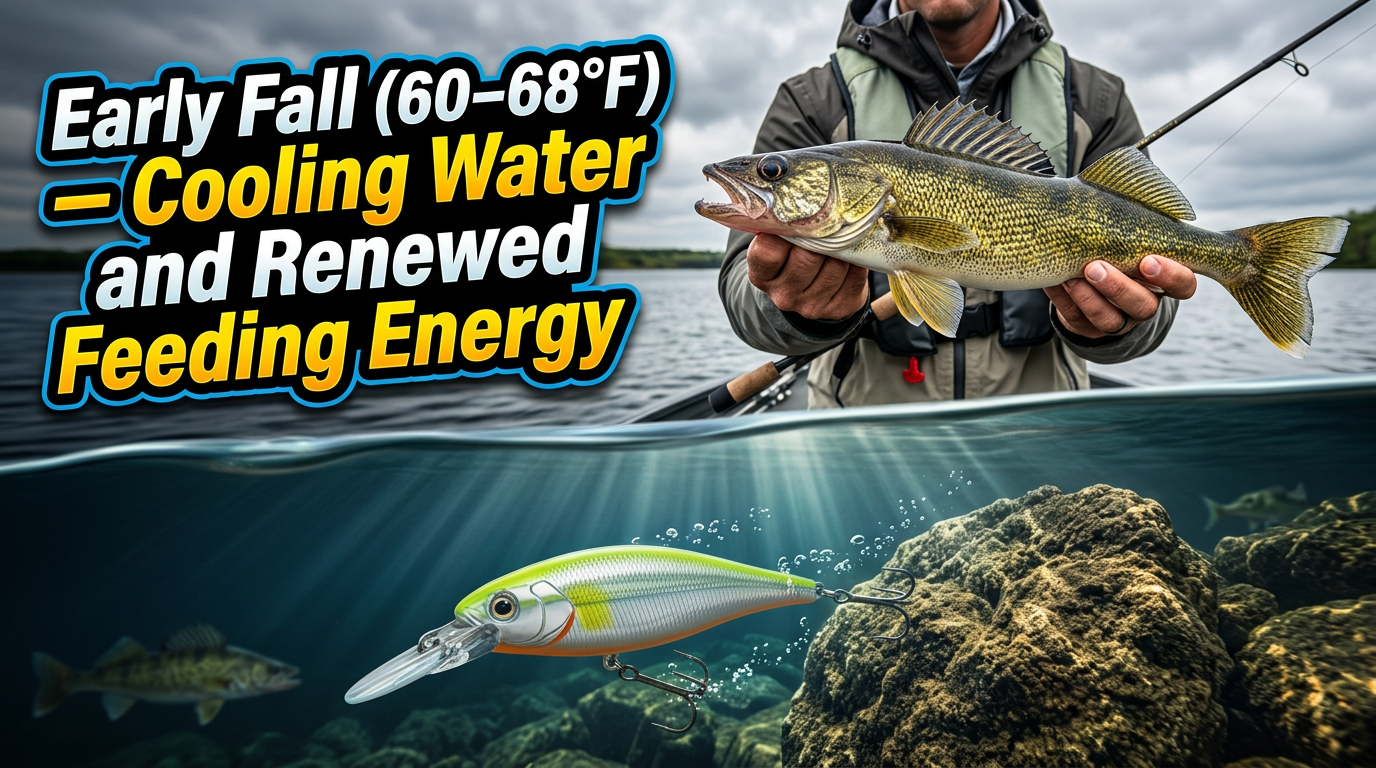
 Early Fall (60–68°F) — Cooling Water and Renewed Feeding Energy
Early fall is one of those stretches of the year that can feel like a complete reset after the grind of late summer. Across the Midwest, even a small drop in water temperature signals a noticeable shift in walleye behavior. Fish that were previously holding deep, moving minimally, or feeding in short windows suddenly begin to spread out and feed more consistently again. It’s not just that activity increases—it’s that the entire ecosystem starts to move with purpose again.
Water temperatures in the 60 to 68 degree range sit right on the edge of seasonal transition. Water is no longer warm enough to keep walleyes locked into deep summer patterns, but it is still stable enough that fish haven’t fully committed to fall feeding migrations. That in-between stage creates a mix of behavior that can feel unpredictable at first, but actually follows very clear rules once you understand how fish respond to cooling water.
One of the first major changes is a return of shallow water activity. Areas that were inconsistent or nearly dead during late summer suddenly become productive again. Shorelines, rocky points, and mid-depth flats begin holding fish more regularly, especially when those areas are connected to deeper water nearby. Walleyes begin using these zones as travel corridors and feeding zones rather than long-term summer holding areas.
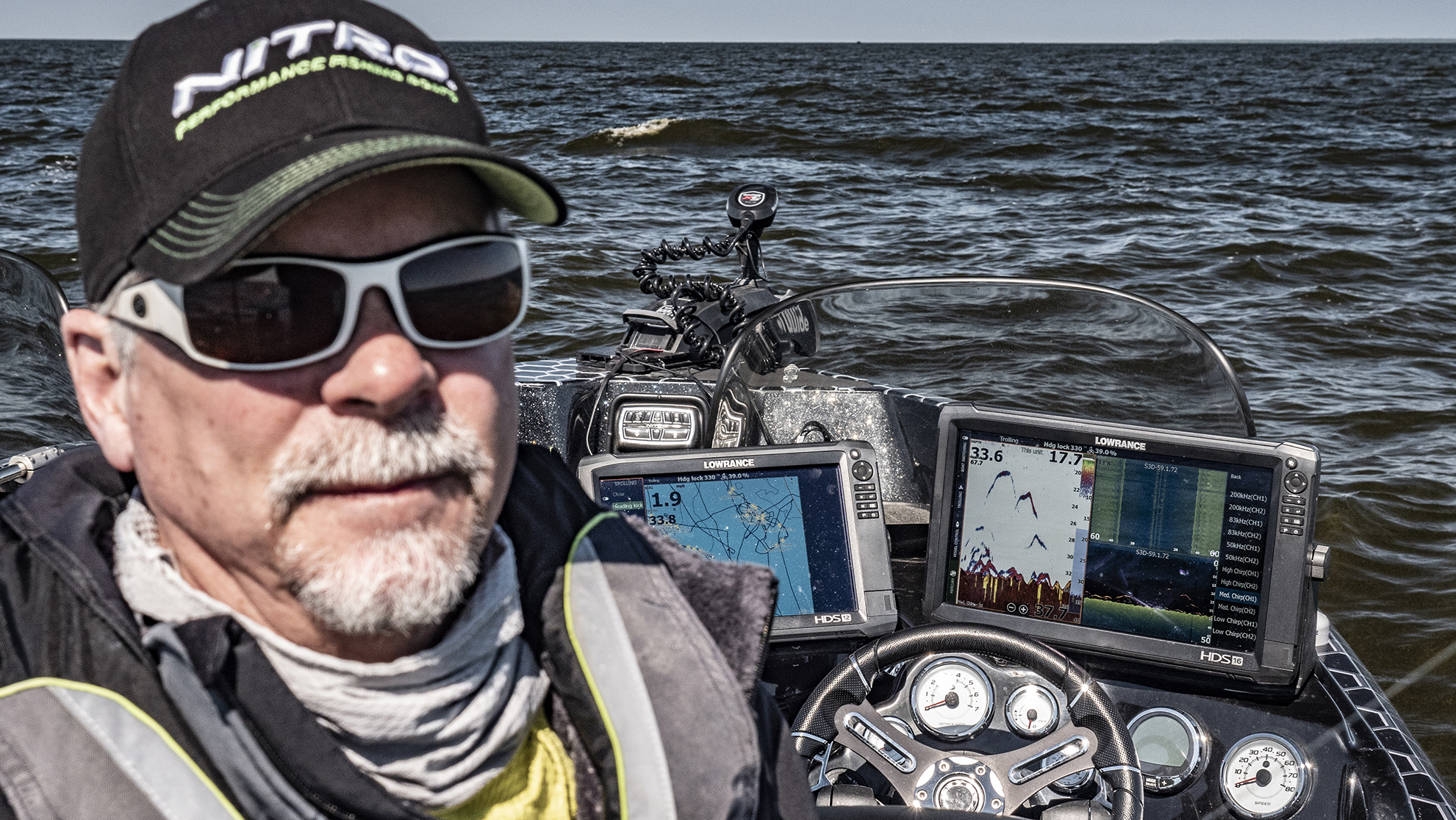
Baitfish movement is the driving force behind everything. As forage species adjust to cooling water, they begin shifting shallower and grouping more tightly. Walleyes follow this movement closely, often positioning just outside or below the main bait schools, ready to ambush. This creates a very patternable system once bait is located.
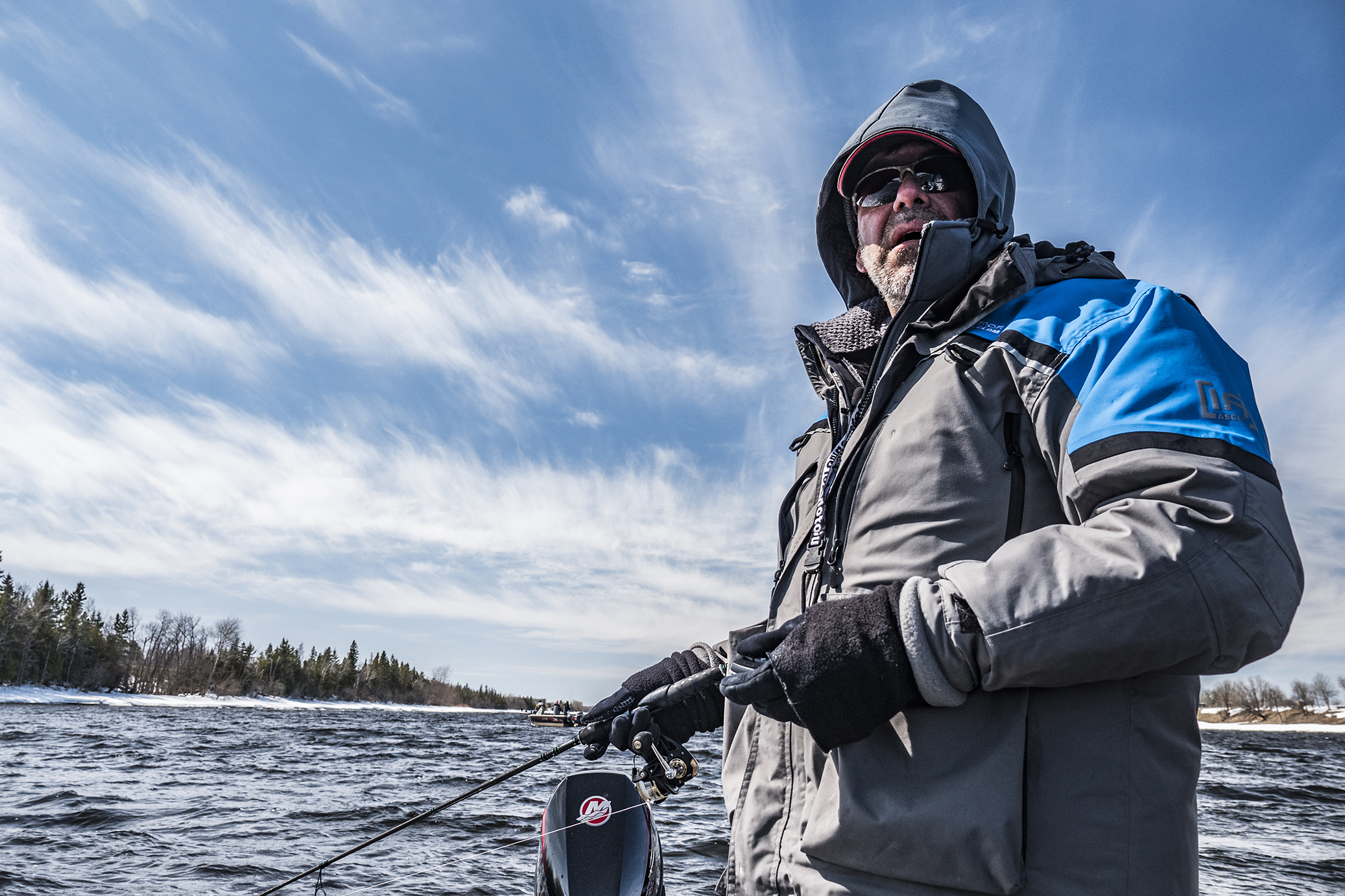
Wind continues to be one of the strongest influencing factors. Windblown structure consistently outperforms calm, protected areas. It concentrates baitfish, increases oxygen levels, and creates subtle current that triggers feeding behavior. In many Midwest systems, simply committing to wind exposure is enough to narrow down productive water dramatically.
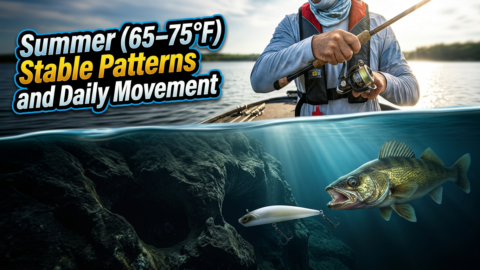
Unlike late summer, where finesse often dominates, early fall reintroduces aggression. Fish are far more willing to chase moving baits. Crankbaits become extremely effective, especially when worked along shorelines, rock transitions, or over shallow flats adjacent to deeper water. The ability to cover water and trigger reaction strikes becomes a major advantage again.
Jigging also becomes more active during this period. Instead of slow, subtle movements, anglers can begin using more lift-and-drop action, working structure with more intention. Fish respond better to movement now, especially when it resembles fleeing baitfish.
Early fall is ultimately a transition of energy. Fish are more active, more spread out, and more responsive—but still not fully locked into the concentrated feeding patterns of true fall. That makes adaptability the key. Anglers who follow wind, track baitfish movement, and stay mobile tend to stay consistently on fish.
As temperatures continue to drop across the Midwest, this scattered pattern begins tightening into more defined feeding zones, setting the stage for one of the most aggressive phases of the entire year.