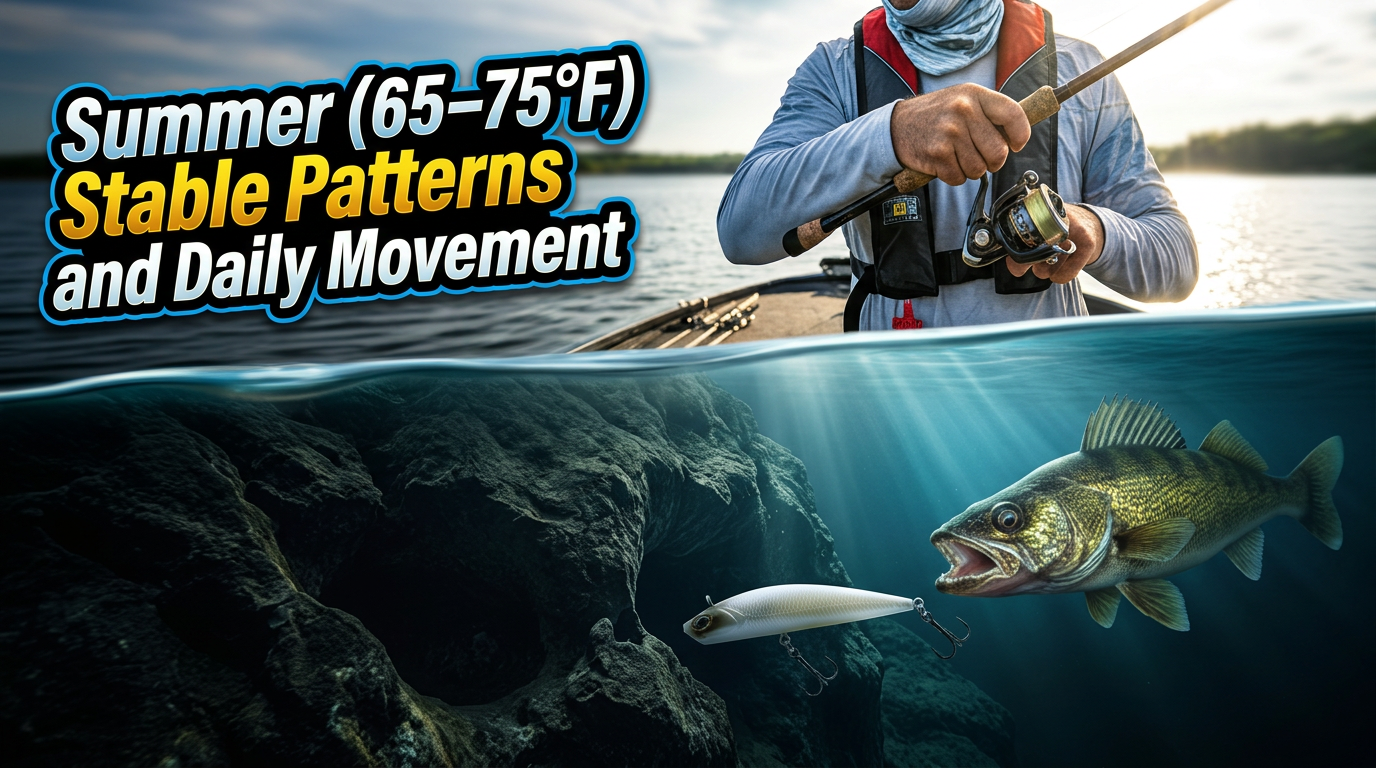
 Summer (65–75°F) — Stable Patterns and Daily Movement
Once early summer transitions into full summer across the Midwest, walleyes begin to establish more stable and repeatable patterns. This is the most structured phase of the open-water season. Fish are no longer shifting rapidly week to week—they settle into predictable daily routines based on light levels, forage movement, and depth preference.
Water temperatures between 65 and 75 degrees define this period. At this stage, walleyes are strongly tied to both structure and depth, but their exact positioning often changes throughout the day. This daily migration becomes the key to consistent success.
During daylight hours, fish are commonly found deeper. Basin edges, offshore humps, deep weedlines, and breaklines become primary holding areas. These zones provide both comfort and access to baitfish. As light levels change, fish begin to move.
One of the most reliable patterns in summer is the low-light bite. Early mornings and evenings often produce the most active fish, as walleyes move shallow to feed. These movements are predictable and can be targeted once anglers understand the system.
Live bait rigging is one of the most consistent presentations during summer. Slowly dragging crawlers or leeches along structure allows anglers to stay in the strike zone for extended periods while covering water efficiently. Spinner rigs are especially effective when fish are spread out or when locating active schools.
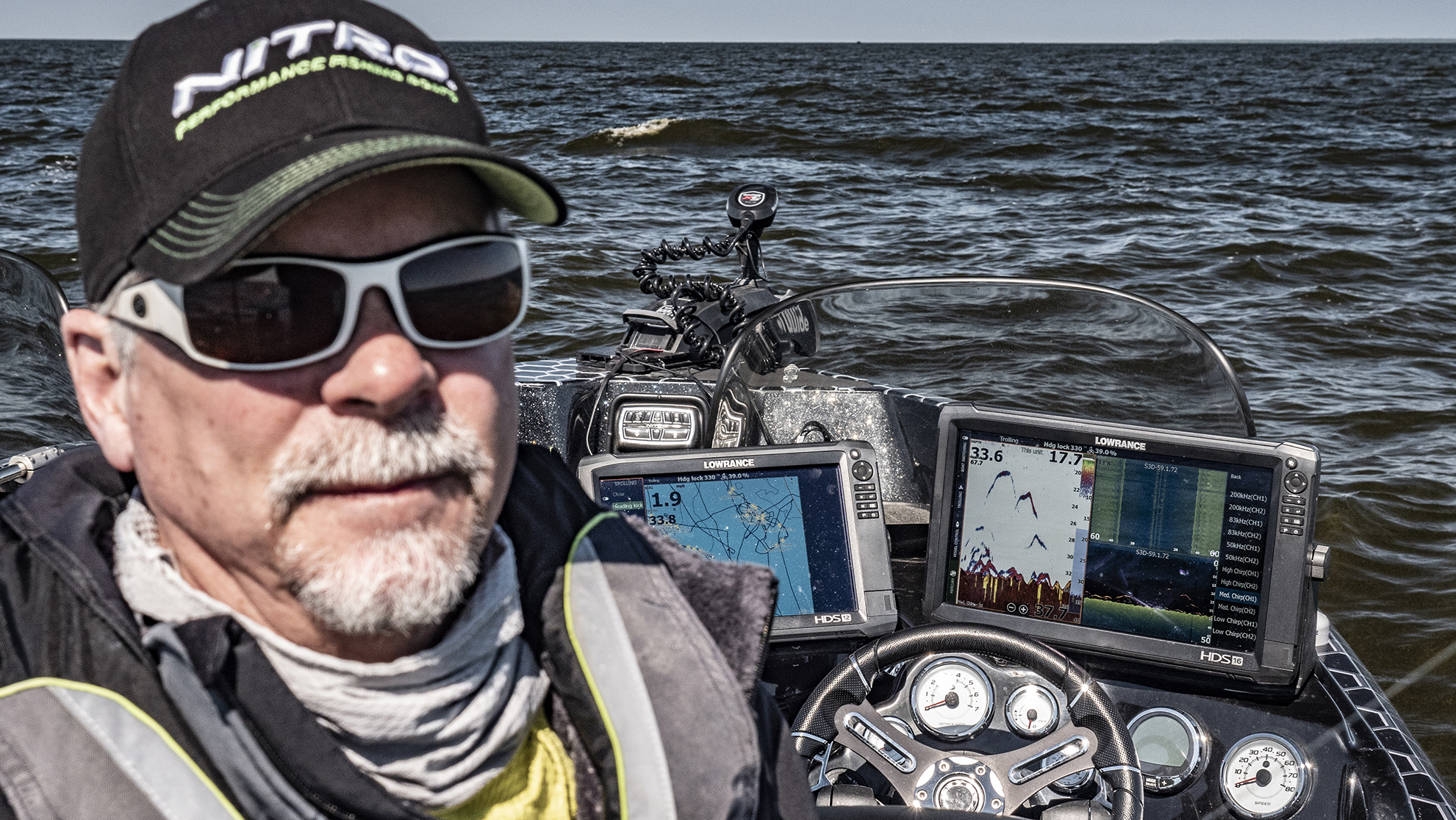
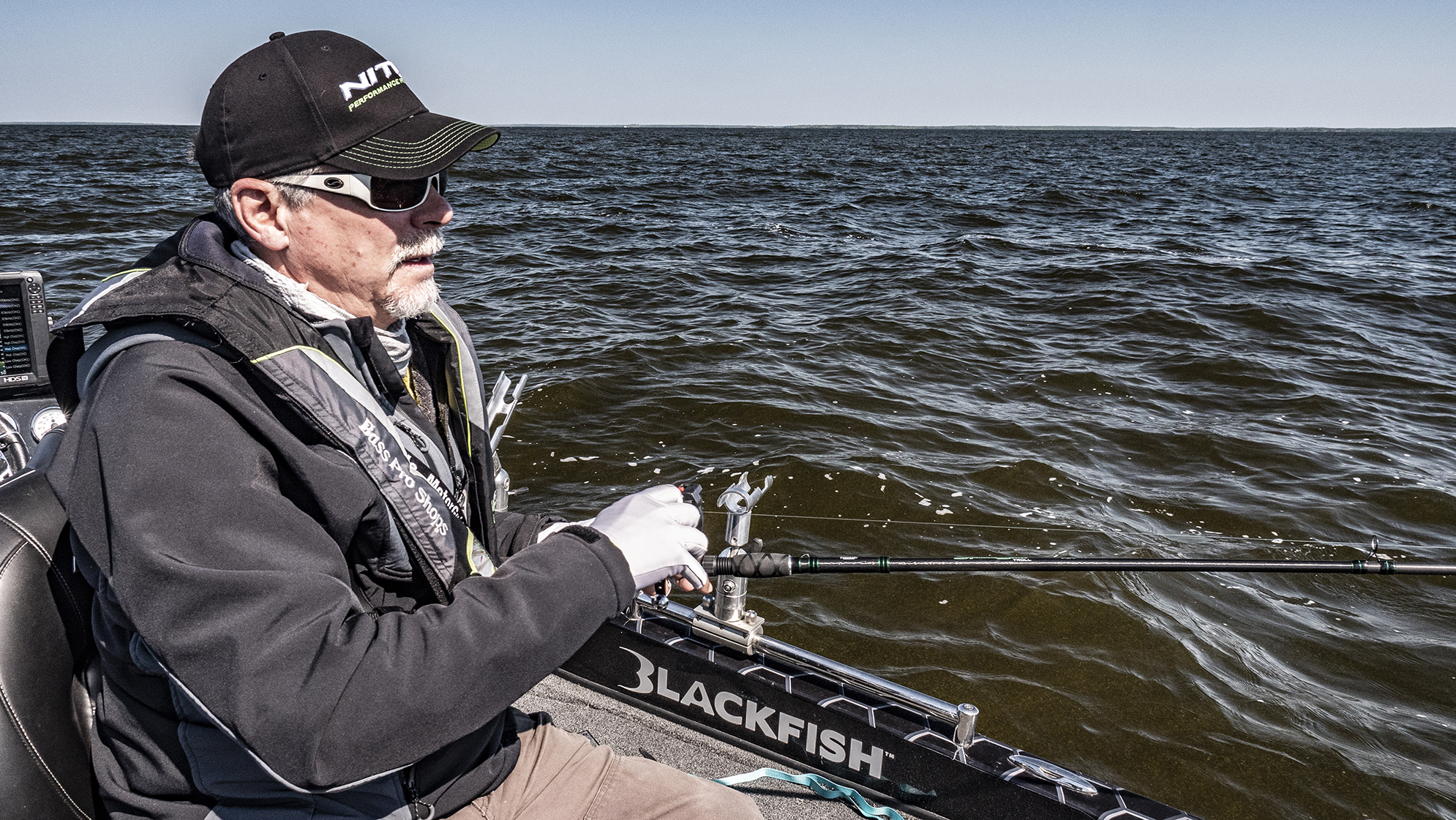
Trolling also becomes a major tool during summer across larger Midwest lakes. Crankbaits allow anglers to cover extensive areas and locate roaming schools of fish. This is especially effective along offshore structure or basin edges where fish may suspend or move frequently.
Wind remains a key factor. Even in stable summer conditions, wind creates current in lakes and helps concentrate baitfish. Windblown structure often holds more active fish, particularly during midday periods when fish are otherwise less aggressive.
Summer fishing is less about constantly finding new patterns and more about recognizing consistency. Once fish are located, they often remain in the same general area for extended periods, allowing anglers to build repeatable success.
As summer progresses and water temperatures peak across the Midwest, fish behavior begins to shift again. Oxygen levels, baitfish distribution, and pressure all influence movement, leading into the more selective and timing-based bite of late summer.