 Late Summer (70–78°F) — Precision, Pressure Windows, and Deep Water Focus
Late summer across the Midwest is often one of the most challenging but also most rewarding times to target walleyes. High water temperatures, heavy recreational pressure, and shifting baitfish patterns all contribute to more selective fish behavior.
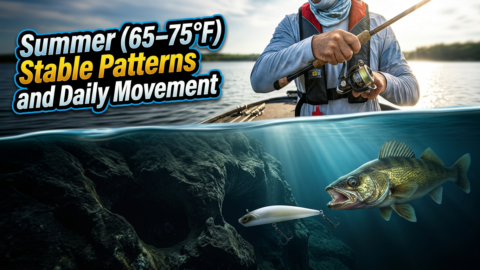
Water temperatures typically range from 70 to 78 degrees during this period. At this level, walleyes remain active but their feeding windows become shorter and more defined. Instead of long, steady feeding periods, anglers often deal with brief opportunities tied to specific environmental conditions.
During the day, walleyes are usually found deeper. Basin edges, deep weedlines, offshore humps, and suspended baitfish zones all become key locations. Fish are often more focused on energy conservation and will hold tight to specific depth ranges where conditions are most favorable.
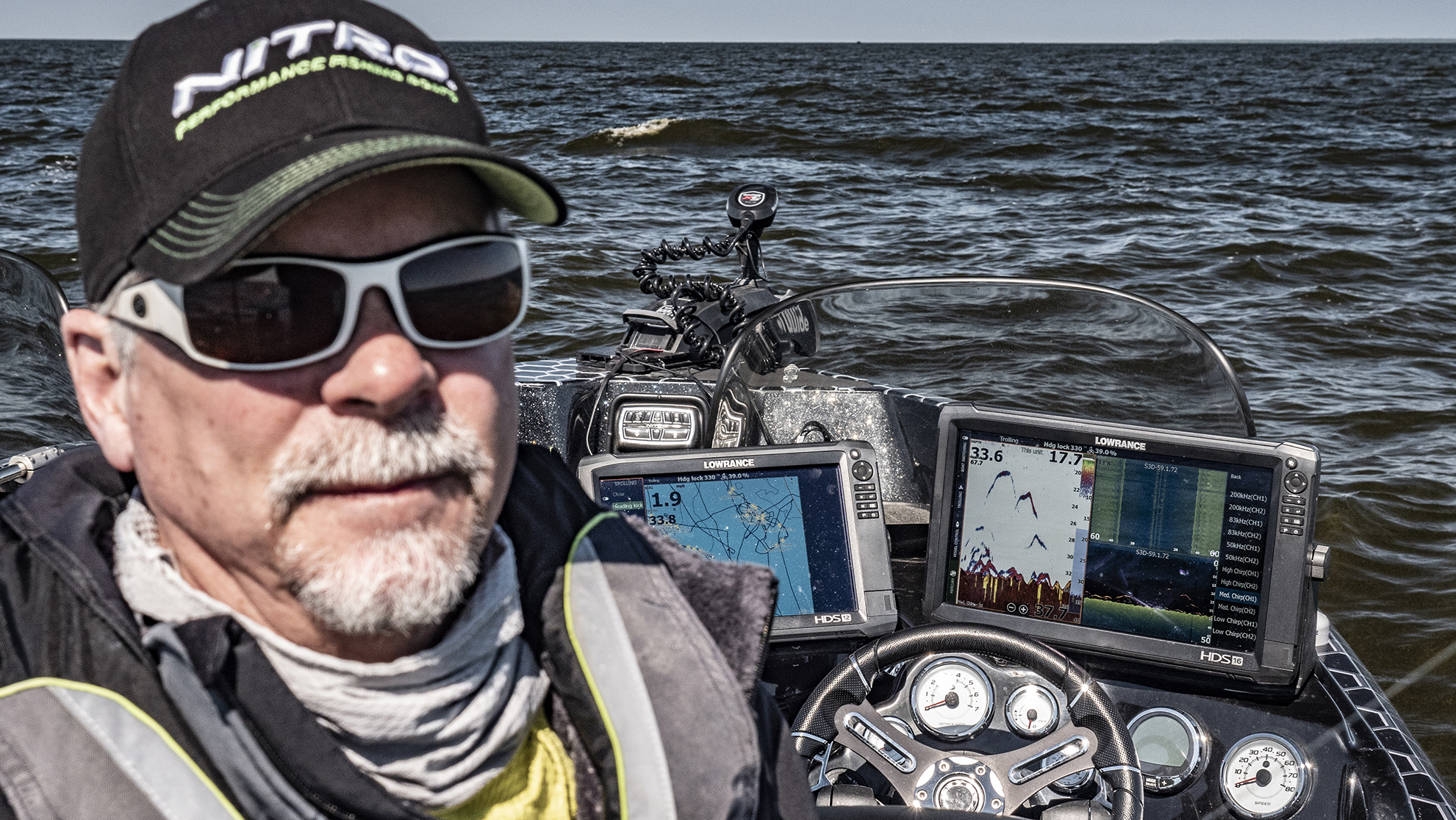
Baitfish location becomes one of the most important factors in late summer. Walleyes are rarely far from food, but they are not always actively feeding on it. Understanding where forage is positioned—whether suspended or tight to structure—often determines success more than anything else.
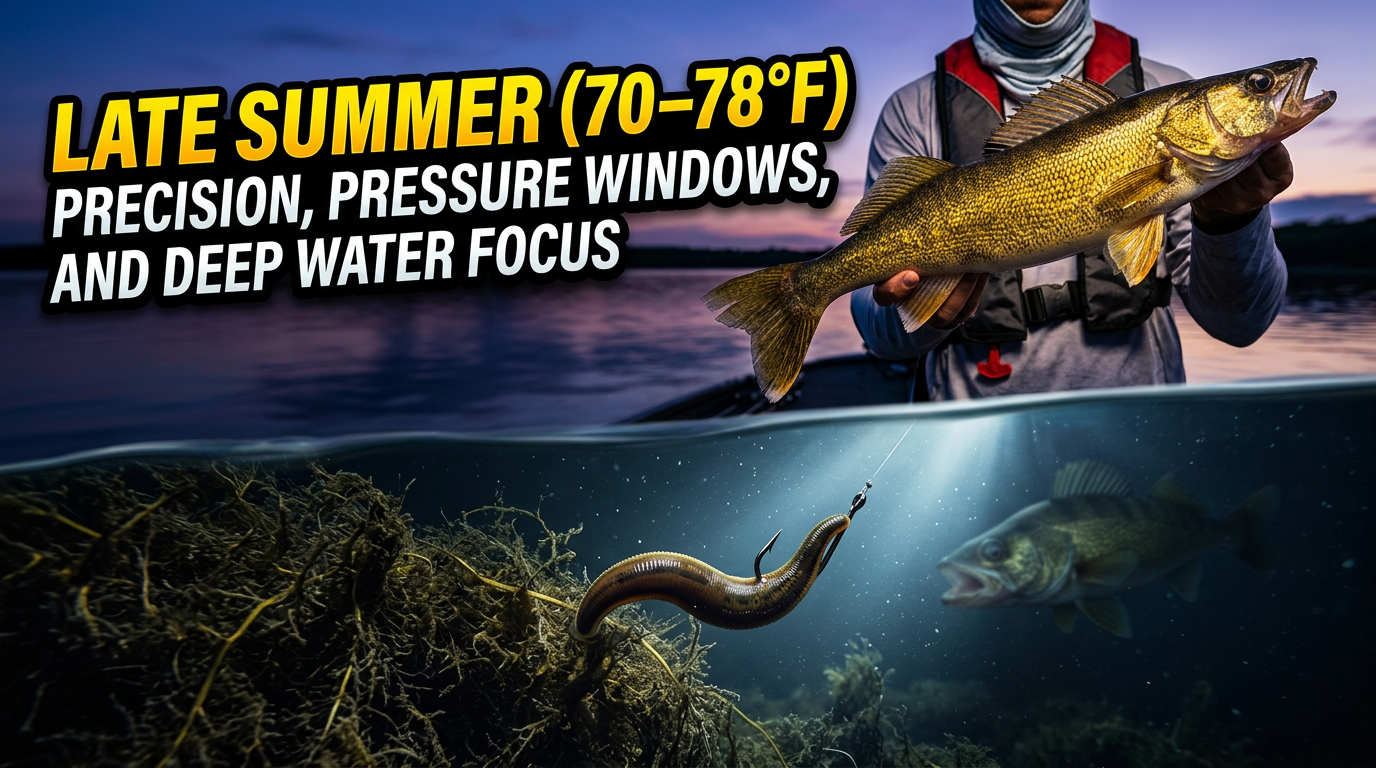
Presentations need to match this more selective behavior. Slow, controlled techniques like live bait rigging become extremely effective. Crawlers and leeches fished deliberately along breaklines or through suspended schools often produce bites when faster techniques fail.
At the same time, covering water is still important. Spinner rigs and trolling remain valuable tools for locating active fish and identifying productive areas. The difference in late summer is that success often depends more on timing than volume of fish found.
Night fishing becomes especially productive across many Midwest systems during this period. As water cools slightly and light levels drop, walleyes move shallow to feed. Shoreline rock, points, and shallow flats can all produce strong nighttime action with crankbaits or jigs.
Late summer is ultimately about precision. Fish are still present and still feeding, but they require more refined approaches, better timing, and stronger focus on depth and baitfish relationships.
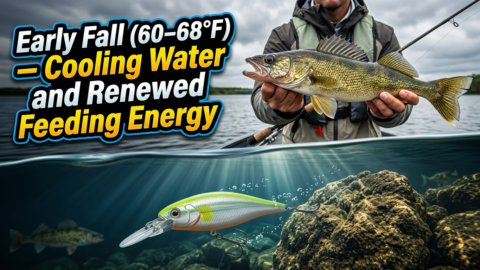
As the first signs of cooling water arrive, everything begins to shift again. Fish respond quickly to temperature changes, and that transition marks the beginning of early fall—one of the most consistently productive periods of the entire year.